
Hair Loss
REGENERATIVE TREATMENT FOR HAIR LOSS IN LONDON
With a proven track record in regenerative medicine, you’re in safe hands.
Hair loss is a common condition that can affect men or women, potentially leading to low self-esteem, anxiety, or depression. Hair loss typically begins with a reduction in hair volume around the temples, crown, or nape of the neck. The most common form of hair loss in men is androgenic alopecia, which is caused by a variety of factors usually linked to hormones. Hair loss can also be linked to illnesses such as PCOS or thyroid disorders.
Depending on the underlying cause of the hair loss, treatments may include drugs such as finasteride or minoxidil, steriod injections or creams, and / or hair transplants. However, recent research into the use of stem cell therapy for hair loss has also shown encouraging results.
Stem cell treatment is a relatively new discipline of regenerative medicine. Where there is a medical need, a clinician may now prescribe stem cell therapy within the UK, in accordance with regulation by the Human Tissue Authority.

DR KHAN SAYS
“Regenerative treatments are an option for people who may have already tried, or considered, conventional treatments. Research using stem cells with latest technology has shown promising results.”
DR TEE SAYS
“Stem cells are located throughout the body and act as natural healers. Studies suggest that when used for medical purposes, stem cells have the potential to accelerate tissue repair, stimulate tissue regeneration, and decrease inflammation.”
HAIR LOSS AND STEM CELL RESEARCH
It is estimated that that up to 80% of men and 40% of women will experience hair loss at some stage in their life, although prevalence may vary according to ethnicity. Where the onset is sudden or unexpected, doctors will usually examine a patient’s medical history and carry out a physical exam to rule out conditions such as scalp infections or nutritional disorders.
Stem cell research is of interest for the treatment of hair loss due to the ability of stem cells to repair and regenerate damaged or exhausted tissue. A study published in 2020 stated: “Stem cell-based therapies have recently received lots of attention as potential novel treatments that focus on reactivating hair follicle stem cells and in this way enhance hair follicle growth, regeneration and development.”

The growth cycle of a hair begins with the anagen phase, when cells divide rapidly in the hair bulb at the root of the follicle. This is followed by the catagen phase that signals the end of the growth stage. The hair then enters a resting state known as the telogen phase, which is eventually followed by normal shedding.
This cycle of constant renewal requires a healthy supply of nutrients to reach the tissue beneath the scalp in order to nourish hair follicles. In the case of androgenic alopecia, hormonal receptors in blood vessels are over-stimulated, which results in proteins being released causing a reduction in the amount of oxygen and nutrients that reach the hair bulb.
Research into the stem cell therapy for hair loss focuses on encouraging normal hair growth by restoring tissue to a healthier state. A recent randomized double-blind clinical trial using a treatment derived from stem cells found that the procedure was able to “significantly increased both hair count and thickness, and its effect was observable within eight weeks of application.”


WHAT ARE STEM CELLS?
Stem cells are special types of cell that occur naturally within the body. They have the ability to replicate themselves or develop into different types of cells through a process known as differentiation.
Hence stem cells have the potential to become new cells in order to perform specific functions. For example, they can differentiate to become blood cells or other types of cell that are active within the immune system. This process enables stem cells not only to play a unique role in the body’s ability to heal itself, but also to encourage the growth of healthy tissue.
HOW ARE STEM CELLS USED IN MEDICINE?
Whilst stem cell therapy is relatively new, stem cells have been the subject of over 40 years of research and there have been a large number of clinical trails. A limited number of treatments for certain medical conditions are now available in the UK.
When used for medical purposes, research suggests stem cells can accelerate tissue repair, stimulate tissue regeneration, decrease inflammation, and stimulate new blood vessel growth.
WHAT TREATMENTS ARE THERE FOR HAIR LOSS?
Hair transplants have been available for a number or years as a way of restoring lost hair. Medications such as finasteride and minoxidil are also widely used to treat male pattern baldness. Minoxidil can be used to treat female pattern hair loss, but women should not take finasteride.
Other measures such as topical applications and hair products generally aim to preserve any remaining hair volume, rather than to stimulate new growth.
However, research into stem cell therapy along with other regenerative treatments such as PRP (platelet rich plasma) has shown positive results and further studies are underway. Where doctors are in agreement, it may be possible for certain patients to benefit from cellular treatments.
CAN I HAVE STEM CELL THERAPY?
Stem cell therapy may be considered for people who require an alternative approach to established procedures. It may be suitable for patients aged 18 to 75 or children in special circumstances, whose condition is stable enough to undergo treatment.
The first stage is to book a consultation with a qualified medical practitioner, who will assess your medical history in order to potentially make a pre-approval application. A multi-disciplinary panel of experts will then consider your application.
If you application is approved, you will then be invited undergo a full health screening and detailed tests to ensure stem cell treatment is an appropriate approach for you. Provided you pass the assessment criteria, you may then begin treatment.
WHAT DOES TREATMENT INVOLVE?
Patients generally require a preparation period that may involve a number of procedures to ensure your regenerative system is at its most receptive. The stem cells can typically then be injected into the body, which depending on the nature of your condition can either be done by intra-tissue injection.
WHERE DO THE STEM CELLS COME FROM?
The stem cells may be either ‘autologous’ or ‘allogeneic’. Autologous stem cells are processed after being harvested from tissue from the patient’s own body, whereas allogeneic stem cells are cultured in a laboratory from a donated source. In our clinics we only use ‘Autologous’ tissue- derived cells. ‘Allogeneic’ cells are currently used for research purposes, or by the NHS for bone marrow transplantation.
HOW ARE STEM CELLS REGULATED?
Stem cell therapies are classed as nouvelle treatments or ‘specials’, which are a permissible category of medicines that are available to meet the clinical needs of an individual patient.
The progress of stem cell patients is carefully monitored and the treating team have a regulatory duty to report any relevant findings to the responsible research NHS Body, with a view to stem cell therapy becoming a standardised licensed treatment in the future.
ABOUT DR KHAN AND DR TEE
The Cellular & Regenerative practice in Harley Street was co-founded by Dr Aamer Khan, author of the forthcoming book, ‘Aesthetic Treatments in Regenerative Medicine: Stem Cells, Stromal Vascular Fraction, Platelet Rich Plasma, and Platelet Rich Fibrin.’
Dr Aamer Khan
Qualifying as a Doctor at the University of Birmingham in 1986 with an MB ChB (Bachelor of Medicine, Bachelor of Surgery), Dr Khan completed his postgraduate training in University Hospitals Birmingham. He spent 24 years working within the NHS, including many years in General Practice in a community with the largest proportion of elderly population in the UK. This led to his passion to study cellular and regenerative medicine, and develop an integrative approach to his medical practice.
As part of his cellular and regenerative interest, Dr. Khan’s Clinic, was one of the first to work with Cytori Stem Cell Technologies in 2008. In 2010, he retired from the NHS to refine protocols at the Harley Street Skin Clinic, and develop his integrative medical practice and the Cellular + Regenerative clinic.
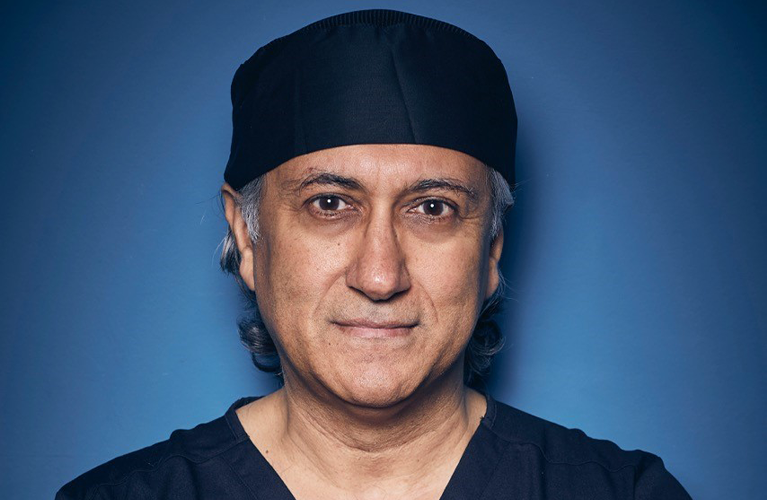
Dr Mike Tee
Dr Mike Tee MB, BChir, BSc (Hons), DLO, DRCOG, MRCGP, is a Cambridge medical graduate, and has over 25 years of experience in the medical profession. Dr Tee is well regarded as an expert in Dermal Fillers, PRP, Thread Lifts, Mole Removal & dermatological minor surgery. Dr. Tee has worked very closely with Dr. Khan and developed a wealth of knowledge and expertise in integrative and regenerative medicine.

Sources
1 – Advances in Stem Cell-Based Therapy for Hair Loss
https://www.ncbi.nlm.nih.gov/pmc/articles/PMC7508456/
2 – A randomized, double-blind, vehicle-controlled clinical study of hair regeneration using adipose-derived stem cell constituent extract in androgenetic alopecia
https://stemcellsjournals.onlinelibrary.wiley.com/doi/full/10.1002/sctm.19-0410
NHS: Hair Loss
https://www.nhs.uk/conditions/hair-loss/
Healthline: Hair Loss
https://www.healthline.com/health/hair-loss
Platelet-rich plasma in androgenic alopecia: myth or an effective tool.
doi.org/10.4103/0974-2077.138352